Your first Russian lesson: start reading
You do not need to memorise all 33 letters today. In this lesson, you will understand how the Russian alphabet works, learn six useful vowel sounds and read real Cyrillic syllables with М, Н and К.
From symbols to readable sounds
The highlighted letters are enough to begin. By the end, combinations such as МА, НО and КУ will no longer look mysterious.
What you will learn
The first lesson should give you a visible result. We will not cover the entire alphabet at once. We will use a small group of letters to build a reliable reading habit.
Understand the system
See what vowels, consonants and the two special signs do.
Produce six vowels
Use a simple mouth cue for А, О, У, Ы, И and Э.
Read combinations
Join М, Н and К with vowels instead of spelling each letter separately.
Your target: look at МА — МО — МУ and read the whole syllable smoothly, without translating it into Latin letters first.
How the Russian alphabet works
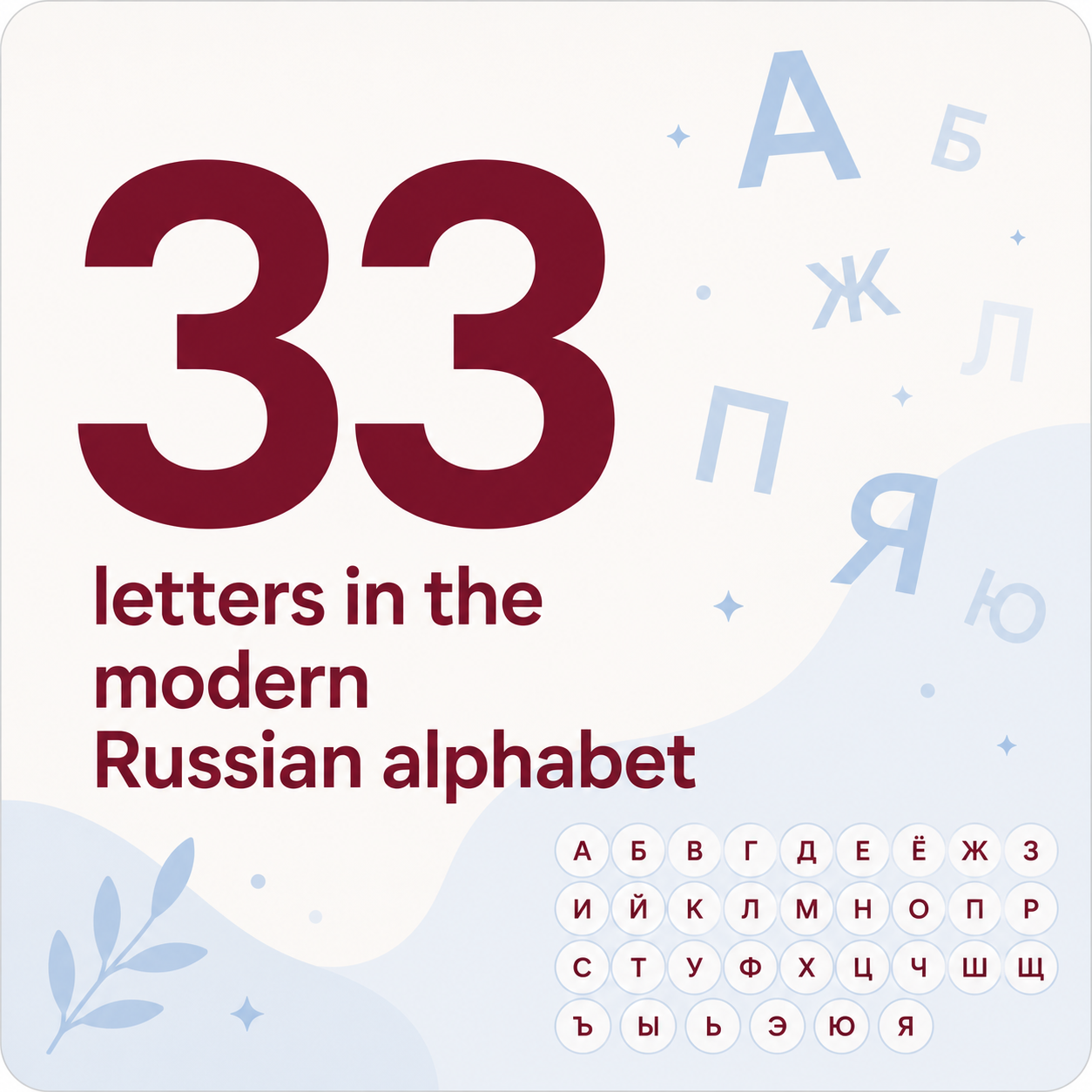
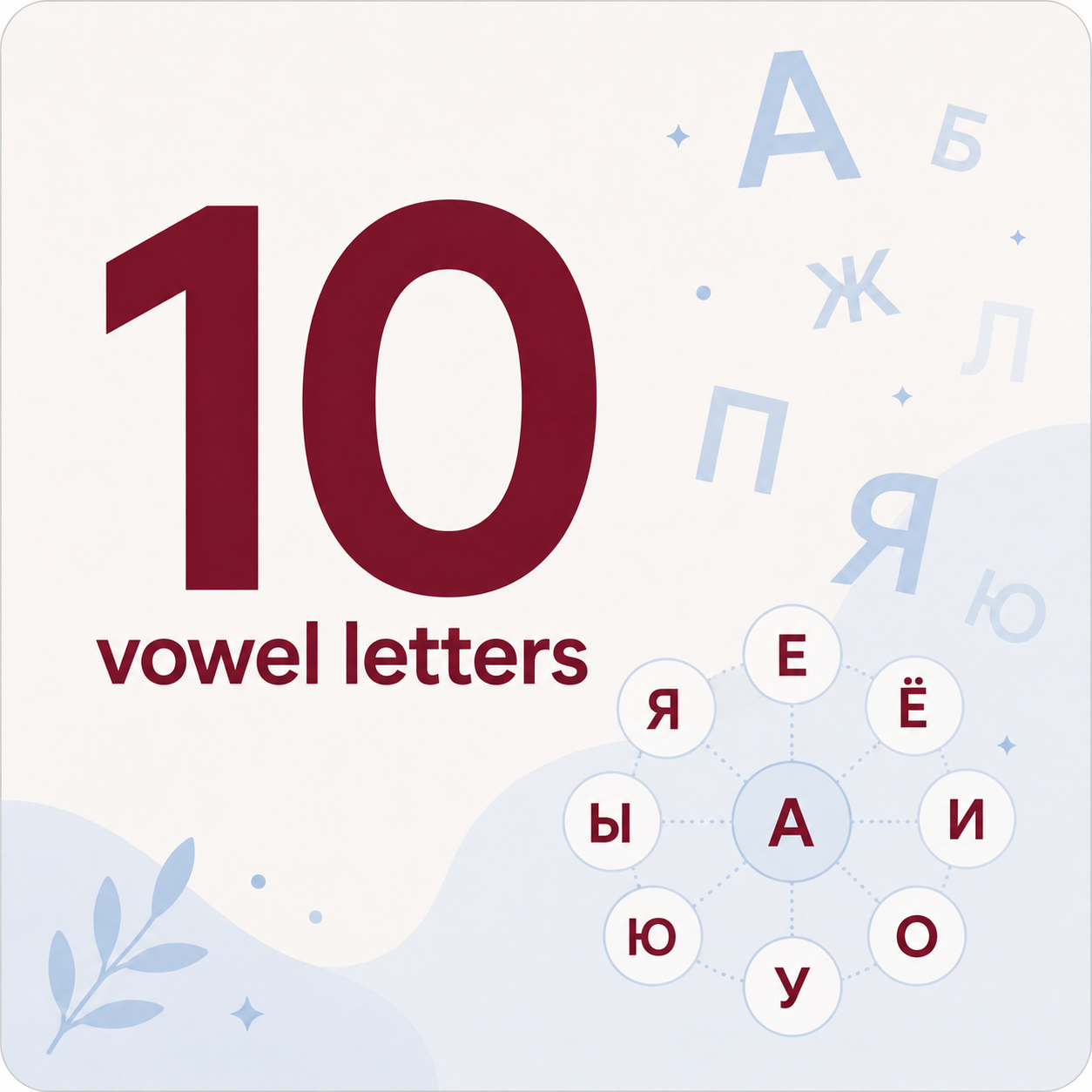
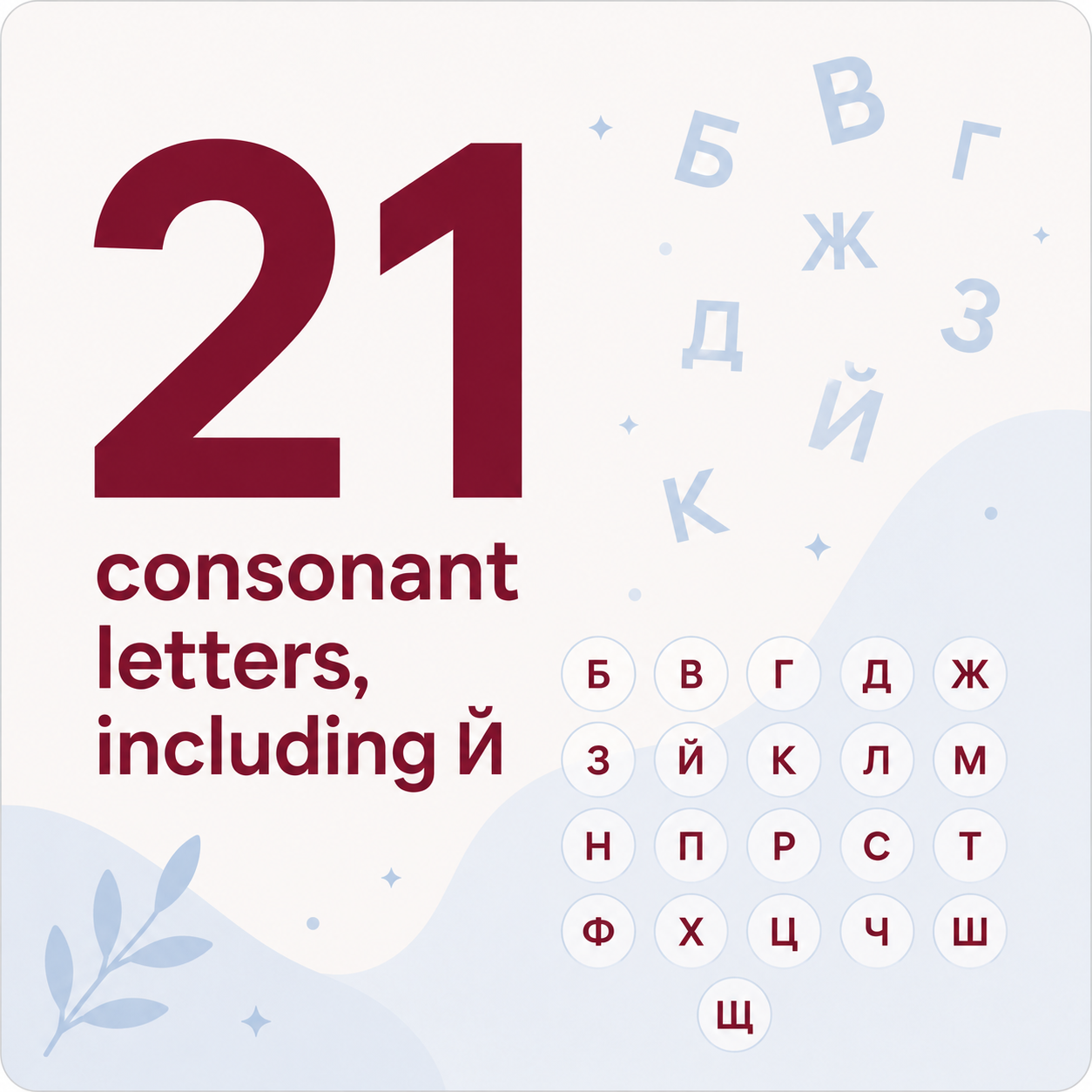
Russian uses the Cyrillic alphabet. Modern Russian has 33 letters. Letters and sounds are closely connected, but they are not always identical: stress, neighbouring letters and the soft sign can change pronunciation.
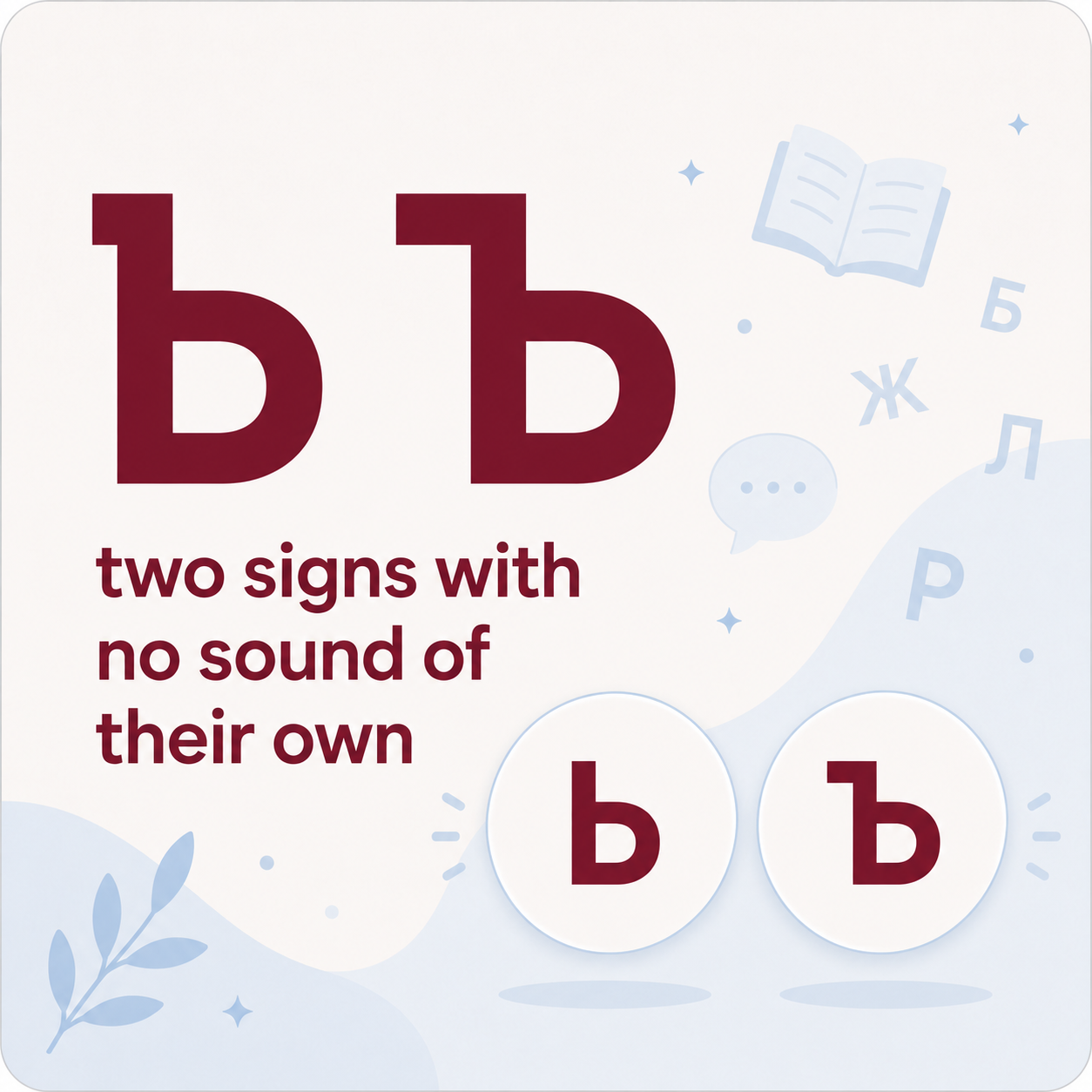
What do the two signs do?
Ь, the soft sign, can show that the consonant before it is soft. Ъ, the hard sign, separates a consonant from a following sound such as я, е, ё or ю. You do not need to use either sign in today’s reading practice.
Russian is often more predictable than English spelling. The useful rule for today is: read from left to right and join the sounds immediately.
Some letters are already familiar
Cyrillic is not a wall of completely new symbols. A few letters look and sound familiar. Others look familiar but make a different sound — these are the ones to notice carefully.
Same look, similar sound
These letters are friendly starting points.
Same look, different sound
Do not read these as English letters.
Interactive 1 · Reveal the sound
Tap a card before reading the explanation.
Six useful vowel sounds
These six letters let you build many beginner syllables. The English examples below are only approximate. Use the mouth cue, listen and imitate the Russian sound.
Close to the vowel in “father”. Keep it clear and open.
When stressed, it is a full rounded sound. Unstressed О can change later.
Similar to the long vowel in “food”, not the shorter vowel in “book”.
Similar to the vowel in “see”. It often makes the previous consonant soft.
Similar to the vowel in “bed”. It begins directly with the vowel sound.
Start from И, then pull the middle of the tongue slightly back without rounding the lips.
Important: each button plays only the isolated vowel sound. Practise complete syllables separately in the next section.
Build your first syllables
A Russian syllable is easier when you do not say the letter names. Do not read М-А. Join the consonant directly to the vowel: МА.
Interactive 2 · Syllable builder
Choose one consonant and one vowel. Then listen and repeat the complete syllable.
A small pronunciation detail
Before И, consonants such as М, Н and К become softer. Compare МА with МИ. You do not need to master softness yet — just notice that the consonant changes slightly.
Read without transliteration
Cover the Listen button with your hand, read the line aloud, then use the audio to check yourself. Keep an even rhythm and avoid pausing between the two letters.
Interactive 3 · Reading lines
Read first. Listen second.
In real Russian words, stress matters. Today all syllables are pronounced clearly so you can focus on joining letters. Reduction of unstressed vowels comes in a later lesson.
Mini quiz
Choose one answer in each card. You can retry immediately after a mistake.
Interactive 4 · Check the logic
Your best score is saved in this browser.
Quick result check
Mark what you can do now. Your choices stay saved on this device.
Visual guide
Save this compact guide for a quick review of the alphabet, six useful vowel sounds and the first syllables you can already read.
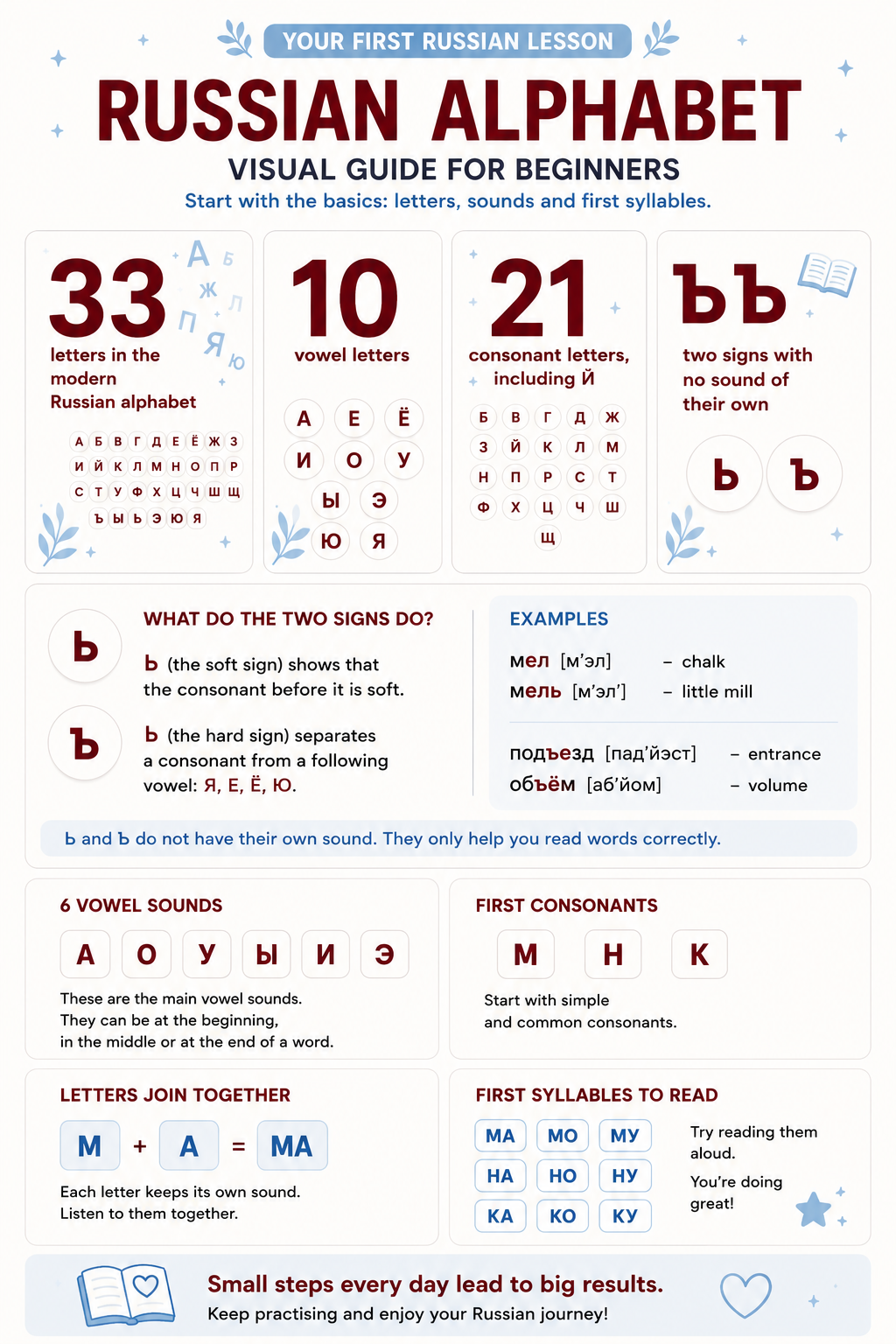
Your first Russian lesson
A compact beginner guide: the structure of the Russian alphabet, six vowel sounds, three first consonants and a simple rule for joining them into readable syllables.
Choose a Pinterest board and save the guide.Ready to turn these syllables into real Russian?
In a personal lesson, we can continue from your exact level, practise pronunciation live and build useful phrases from the letters you already recognise.
