The player window could not open. Open the music player in a tab.
How to read Cyrillic
Cyrillic looks unfamiliar at first, but the system is more predictable than it seems. Start with letters you already recognise, then move on to the ones that need more practice.
Why Cyrillic feels difficult at first
When you start learning Russian, the alphabet can feel like a wall. You see letters such as Ж, Ы, Щ or Ю, and your brain tries to treat them like English letters.
Russian spelling is also more regular than English spelling. Once you know the sound of each letter, reading becomes something you can practise instead of something you have to guess.
You do not need to memorise all 33 letters in one evening. It is easier to start by sorting them into three groups: familiar letters, new letters and false friends.
The alphabet map
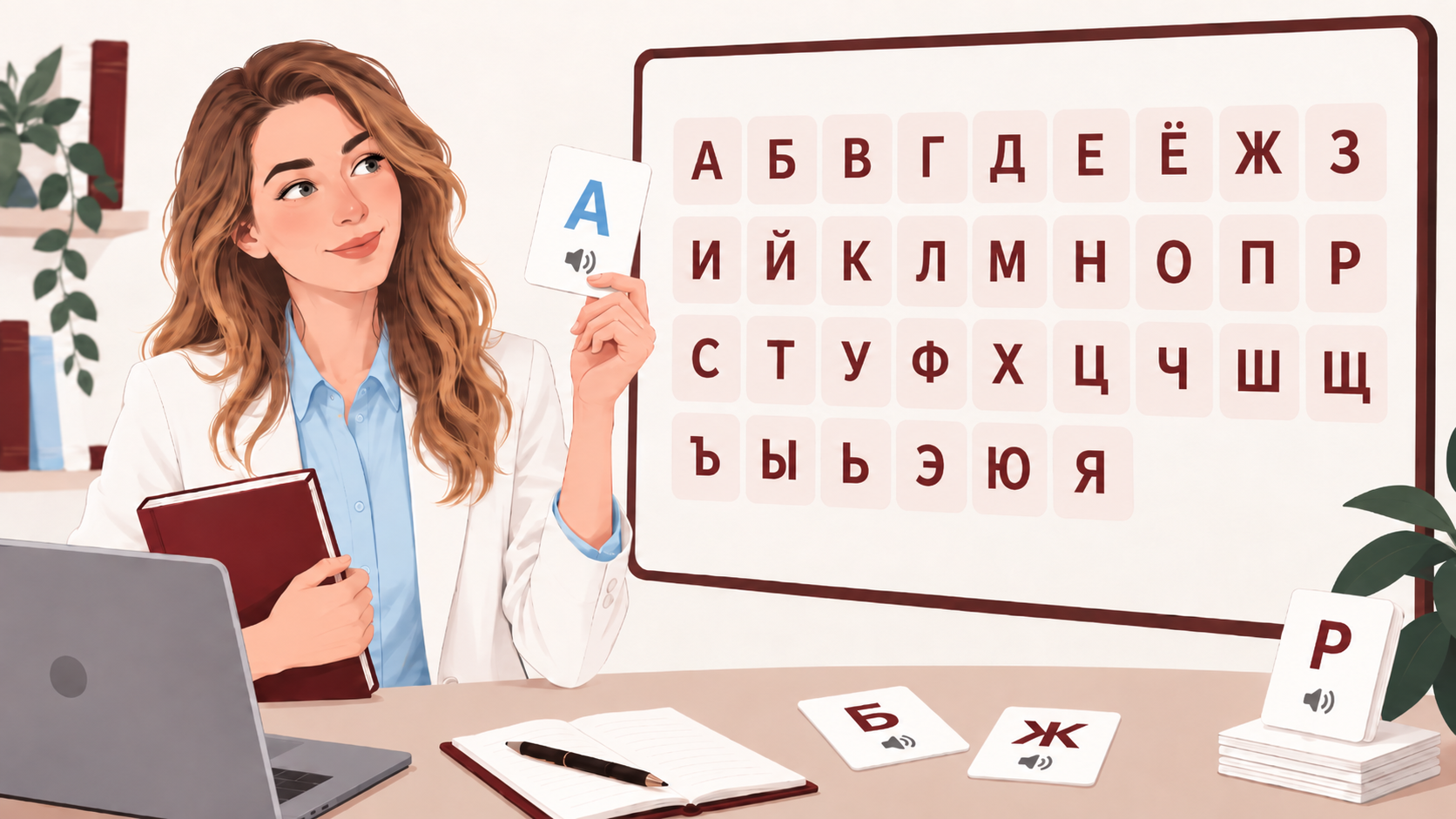
Russian has 33 letters. They become much easier once you split them into three groups.
Close to English in both shape and sound. You already know how to read these.
New shapes, clear sounds: once you learn them, they are easy to read.
They look like English letters and sound like something else entirely.
Start with the most useful letters
You don't need all 33 at once. Start with the twelve that let you read real words today. Tap ♪ to hear each sound.
False friends: letters that trick you
The hardest letters aren't always the strange-looking ones. The tricky ones look familiar but sound different, so it is easy to read them as if they were English.
| Letter | Don't read as | Read as | Example |
|---|---|---|---|
| В | B | V | вода — voda — water |
| Н | H | N | нет — nyet — no |
| Р | P | R | рука — ruka — hand |
| С | C | S | суп — sup — soup |
| У | Y | U | утро — utro — morning |
| Х | X | Kh | хорошо — khorosho — good |
Mini trainer: check your false friends
Test yourself on the letters that most often confuse beginners. Click the cards and choose the right sound for the letters that usually confuse beginners.
Tap a card to check what the Russian letter really sounds like.
Choose how to read each Russian letter.
A simple way to learn Cyrillic
Instead of memorising 33 letters in isolation, use the same four-step routine each time you practise.
Look at the letter and say its sound out loud.
Read small syllables: ма, мо, та, ко.
Move to whole words: мама, кот, там.
Connect the word with its meaning or a situation where you might use it.
Practice: read your first words
Read these slowly. Sound out the letters first, then say the whole word — and check yourself with the audio.
| Russian | Approximate reading | Meaning |
|---|---|---|
| мама | mama | mum |
| кот | kot | cat |
| там | tam | there |
| сок | sok | juice |
| банк | bank | bank |
| такси | taksi | taxi |
Read aloud three times, slowly: мама, кот, сок, такси.
Find the false friends in these words: вода, рука, суп, нет.
Read the word first. Then open the answer.
Common beginner mistakes
The shape looks familiar, so English speakers often give it the English B sound.
вода is read roughly as voda.
The letter looks like English P, which makes the wrong sound easy to reach for automatically.
Россия begins with the same sound as “Russia” in English.
Stopping at every sound can make early reading practice slow and frustrating.
Read the whole word, use the audio to check yourself, and refine pronunciation with more listening and feedback.
What to remember
Sort Cyrillic into familiar letters, new letters and false friends. It is easier to learn the alphabet in groups than as one long sequence.
В, Н, Р, С, У and Х look familiar to English speakers, but they do not sound the way their shapes suggest.
You do not need to know all 33 letters before you start reading. Use the letters you already know to build syllables and short words.
Listen to the examples, compare them with your reading and keep going. Pronunciation can become more precise with practice and feedback.
Visual guide
Save this Cyrillic guide as a quick reference for your first reading practice. It helps you return to the alphabet map, useful letters and false friends.
What to learn next
Continue with one of these closely related topics.
your Russian reading?
In a free 30-minute trial, we can look at what you can already read and decide what to work on next.