
The tricky part is knowing where to begin.
Russian classics can be hard going. Dostoevsky's characters spend pages arguing about philosophy, and Gogol's language can puzzle even native speakers. Pushkin's prose may also contain unfamiliar vocabulary and historical references.
There are shorter classics too, including children's stories and folk tales, along with works for adults that you can finish in an afternoon.
I've chosen works from nineteenth- and twentieth-century Russian literature, along with children's classics and folk tales. The suggestions run from A1 to C2. I'll cover contemporary Russian fiction and Russian poetry in separate articles.
The levels are my reading recommendations, not official CEFR ratings for individual books. I've looked at vocabulary, grammar, sentence length, style and cultural references. Your reading habits matter too. I'm referring to the original Russian texts throughout; at A1 and A2 especially, you'll probably need a dictionary or help from a teacher.
How to choose a Russian book for your level
Start with the first page
Read the first page before you choose a book. Can you follow what's happening, even with a few unknown words?
Identify the real difficulty
If you're stuck on vocabulary, try a dictionary. Historical references and irony are often easier to understand with notes or a teacher's explanation.
Read a short passage aloud
Read a paragraph aloud. Hearing the rhythm can help you make sense of long sentences and dialogue.
Don't memorise every word
Look up the words that matter to the plot and the expressions you keep seeing. You can leave the rest for another reading.
Choose a book you actually want to finish
Pick a book that makes you want to turn the page. You can always come back to that famous novel you stopped reading after ten pages.
You can find many Russian classics in online libraries and bookstores. Look for the original Russian text, and check whether you’re choosing an adapted or unabridged edition.
A1: Short Russian Folk Tales
At A1, even a short original text can take some work. You're still getting comfortable with Cyrillic, basic grammar and everyday vocabulary.
Begin with a short, repetitive folk tale. A familiar sequence and illustrations can help you follow the action.
Russian folk tales (Русские народные сказки)
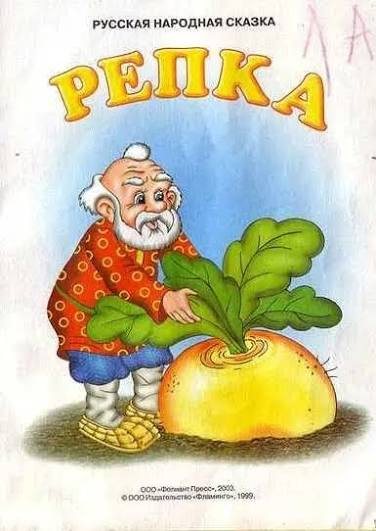
«Репка» (The Turnip)
An old man plants a turnip that grows too large for him to pull out alone. One by one, his family and animals come to help.
The story repeats the same actions as each new helper joins in. Choose an illustrated version for A1 and ask your teacher about unfamiliar folk expressions.
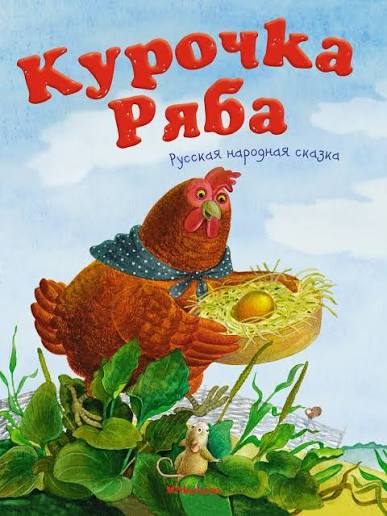
«Курочка Ряба» (The Speckled Hen)
An old couple own a hen that lays an unusual golden egg. One day, something unexpected happens to it.
There are few characters, and several actions repeat. An illustrated retelling can help at A1, although some traditional words will need explaining.
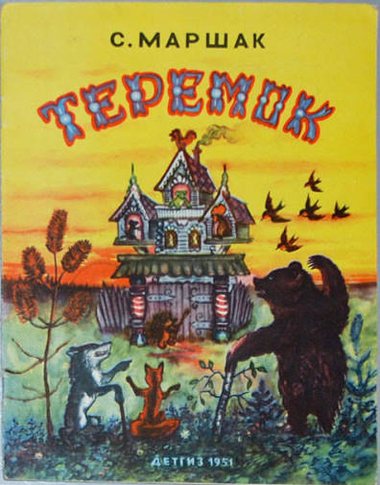
«Теремок» (The Little House)
A small animal discovers an empty house in the forest and decides to live there. More animals arrive, each asking who lives inside.
Every newcomer asks a similar question, so you can recognise the pattern as you read. The vocabulary changes between versions; choose a short illustrated one for A1.
Where to start at A1
Start with «Репка» for repeated actions, or «Курочка Ряба» for a very short story with familiar family words. If you want more dialogue, try «Теремок».
Choose short illustrated retellings and read with a teacher when needed. The original folk language may include unfamiliar forms even in a brief story.
A2: Short Stories and Folk Tales
Once you can follow simple past-tense sentences, try a short story.
At A2, look for a clear plot, a small cast and situations you can picture. Children's stories often fit the bill, though their language isn't always as simple as it first appears.
Leo Tolstoy (Лев Толстой)
Tolstoy wrote much more than War and Peace and Anna Karenina. His short educational stories for children, including pieces from his reading books, are a gentler introduction to his prose.
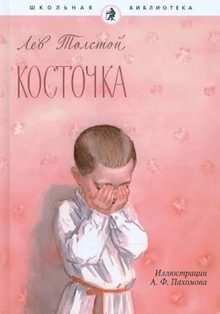
«Косточка» (The Plum Stone)
Vanya can't stop thinking about the plums his mother has bought. When one goes missing, his father asks the family about it.
The family setting and short conversations make the events easy to follow. You can also practise past-tense verbs, although a few expressions may be unfamiliar.
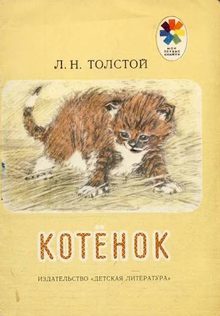
«Котёнок» (The Kitten)
Two children discover that their cat has kittens and grow attached to one of them. When the kitten ventures outside, the children face an unexpected danger.
The children’s actions introduce verbs of movement and everyday descriptions. Some words for the surroundings may need looking up.
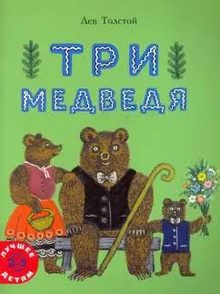
«Три медведя» (The Three Bears)
A girl loses her way in the forest and finds a house belonging to three bears. While its owners are away, she explores what is inside.
Repeated descriptions let you compare adjectives and notice how their endings change. Knowing the plot beforehand also helps you concentrate on the Russian.
Konstantin Ushinsky (Константин Ушинский)
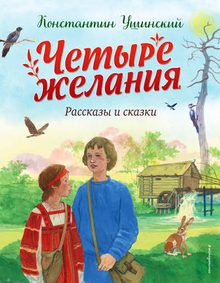
«Четыре желания» (Four Wishes)
Mitya finds something to enjoy in every season of the year. He shares his wishes with his father, who encourages him to remember what he says.
Each season is described in a similar way. Read it to revise weather, seasons and activities, and to see a few less familiar verb forms.
Russian folk tales (Русские народные сказки)
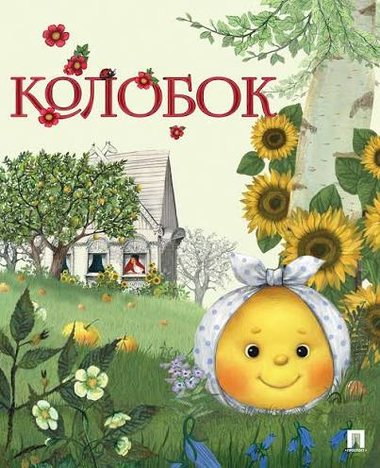
«Колобок» (The Little Round Bun)
A freshly baked little bun rolls away from its grandparents and sets off down the road. Along the way, it meets animals who want to stop it.
The meetings follow a repeated pattern, including the same song. Notice how the characters speak and move; diminutives and folk expressions may be new.
Where to start at A2
I'd begin with «Косточка»: it's short, and the family situation helps you work out unfamiliar words.
For repeated phrases and familiar plots, pick «Три медведя» or «Колобок». «Четыре желания» is good for seasons and weather; «Котёнок» has more action and movement verbs.
At A2, you may need to reread sentences and check unfamiliar words.
Folk tales come in many retellings. Pick a short one you can follow, ideally with illustrations.
B1: Classic Children’s Stories
By B1, you may be ready for longer stories. Children's classics are useful for practising dialogue and following events without checking every sentence.
I'd start with Nikolay Nosov and Viktor Dragunsky. Their stories about children are full of misunderstandings, friendships and funny moments.
The dialogue can be tricky, especially when the characters use everyday, conversational language.
Nikolay Nosov (Николай Носов)
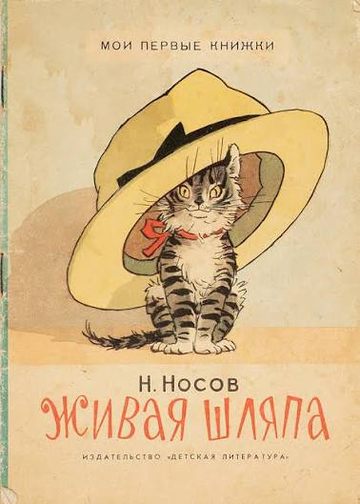
«Живая шляпа» (The Living Hat)
Two boys are drawing when a hat drops to the floor and begins to move on its own. The strange sight frightens them, and they try to understand what is happening.
The humour comes from the boys’ reactions and quick exchanges. Follow their movement verbs and the short lines of dialogue.
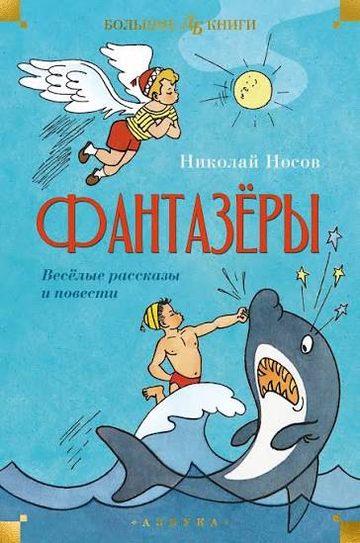
«Фантазёры» (The Storytellers)
Mishutka and Stasik take turns inventing impossible stories. Their conversation raises a question about imagination and telling lies.
The boys invent increasingly unlikely stories and tell them in lively, conversational Russian. Notice how they talk about imaginary events and how the jokes work.
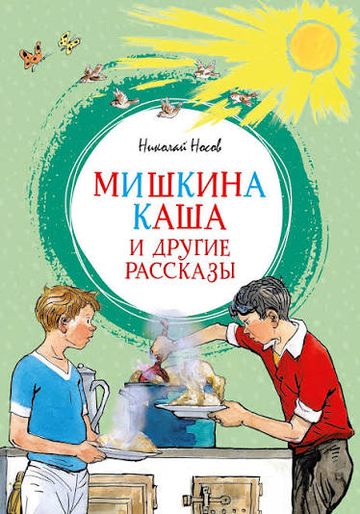
«Мишкина каша» (Mishka's Porridge)
Two boys are left to look after themselves and decide to cook porridge. They soon find that even a simple meal can be difficult to prepare.
The cooking mishaps introduce words for food preparation and household tasks. The dialogue also contains informal expressions and plenty of action verbs.
Viktor Dragunsky (Виктор Драгунский)
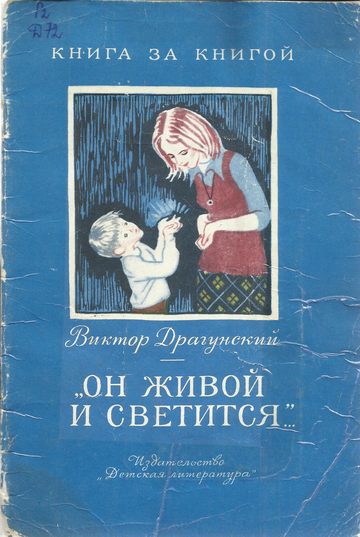
«Он живой и светится» (It's Alive and Glowing)
A boy waiting for his mother discovers a tiny creature that glows in the dark. He has to decide what matters more to him: an ordinary toy or this unexpected discovery.
The narrator is a child who talks openly about what he feels and values. His conversational expressions are useful, though some emotional passages deserve a second reading.
Where to start at B1
For humour, try «Живая шляпа» or «Фантазёры». Dragunsky's «Он живой и светится» is a good place to explore feelings and a child's point of view.
Choose «Мишкина каша» if you'd like to pick up words for cooking and chores.
Read a short exchange aloud and listen for the characters’ changing intonation.
B2: Discover Chekhov, Pushkin and Garshin
At B2, nineteenth-century prose starts to become more approachable.
Short stories let you become familiar with an author's language before starting a novel.
Pay attention to historical vocabulary, forms of address and the social rules the characters take for granted. Sometimes the author leaves the most important part unsaid.
Anton Chekhov (Антон Чехов)
Chekhov is a good place to start. His stories can be very short, yet full of humour, irony and small observations about people.
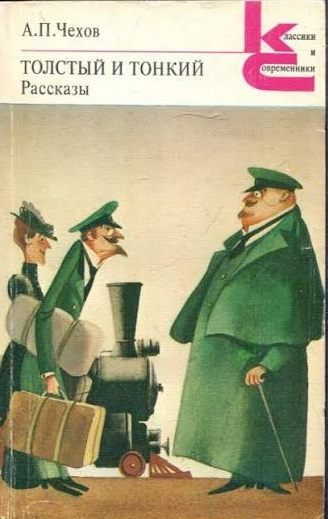
«Толстый и тонкий» (The Fat and the Thin)
Two former classmates meet again at a railway station and warmly greet one another. Their conversation changes when they realise how different their places in society have become.
Nearly the whole story unfolds through dialogue. Knowing something about official ranks in imperial Russia helps explain the abrupt change in how the men speak to each other.
«Смерть чиновника» (The Death of a Government Clerk)
A minor civil servant accidentally sneezes on an important official during a theatre performance. His embarrassment grows as he worries about how the incident will be received.
The clerk grows increasingly anxious after a minor accident. Pay attention to the formal expressions he uses and the social hierarchy behind his fear.
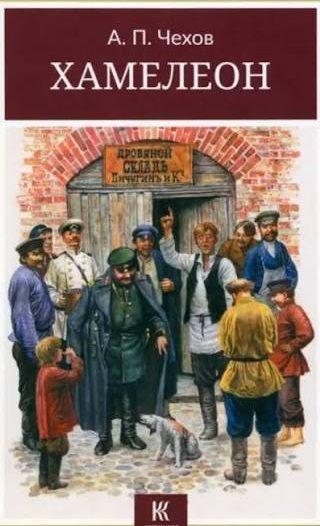
«Хамелеон» (The Chameleon)
After a man claims he was bitten by a dog, a police inspector tries to settle the dispute. His reaction shifts as different people offer details about the animal.
The inspector changes his tone as he learns who might own the dog. The shifts in speech show how status works in the story; some colloquial and historical expressions may be unfamiliar.
Alexander Pushkin (Александр Пушкин)
«Метель» (The Blizzard)
Two young people secretly plan to marry despite opposition from the girl's family. As a snowstorm rolls in, reaching the wedding becomes far more difficult than expected.
The plot moves quickly, although Pushkin’s sentences and descriptions reflect nineteenth-century language and customs. Try it once shorter B2 stories feel comfortable.
Vsevolod Garshin (Всеволод Гаршин)
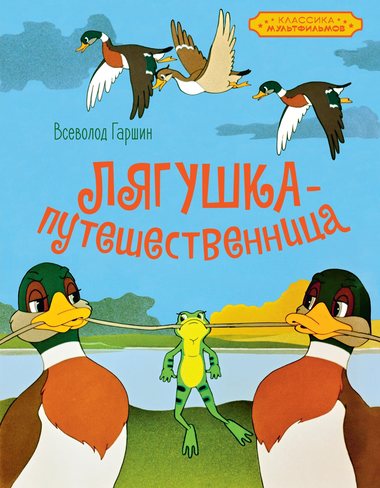
«Лягушка-путешественница» (The Traveling Frog)
A frog dreams of seeing more of the world when she hears migrating ducks talking about their journey. She comes up with an unusual plan to travel with them.
The dialogue and narration contain movement verbs, reported speech and expressive adjectives. A few turns of phrase belong to nineteenth-century storytelling.
Where to start at B2
I'd begin with Chekhov's «Толстый и тонкий». It's quick to read, leaving time to look more closely at the dialogue and irony.
Continue with «Смерть чиновника» and «Хамелеон» if you enjoy his satire. Notice how social status changes the way people speak in each story.
Pushkin's «Метель» is the next step if you want a longer story.
Garshin’s «Лягушка-путешественница» has fast-moving dialogue and plenty of verbs of motion.
C1: Dostoevsky, Gogol, Bulgakov and More
At C1, you can start spending more time with longer, linguistically demanding books.
At this level, longer works by Dostoevsky, Gogol and Pushkin become possible with time and reference notes.
Expect difficult passages. Nineteenth-century prose often has long sentences and language tied to institutions that no longer exist. Twentieth-century works introduce Soviet references, slang and political satire.
Fyodor Dostoevsky (Фёдор Достоевский)
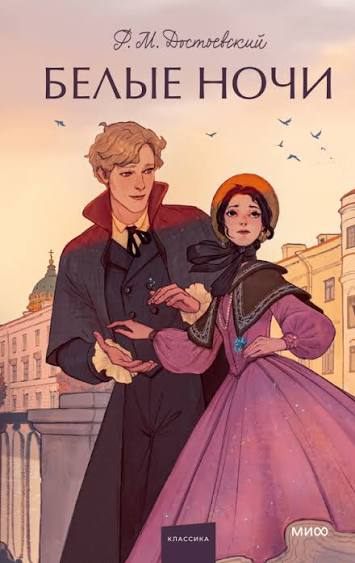
«Белые ночи» (White Nights)
During the white nights of St Petersburg, a lonely young man meets Nastenka. As they walk and talk over several evenings, both begin to share their hopes and worries.
Much of the story consists of conversations and the narrator’s long accounts of his feelings. Its manageable length makes it a useful introduction to Dostoevsky, though the abstract vocabulary and sentence structure are demanding.
Nikolay Gogol (Николай Гоголь)
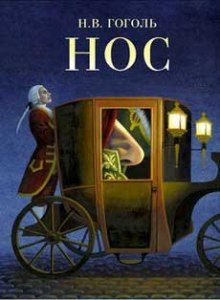
«Нос» (The Nose)
One morning, a St Petersburg official discovers that his nose has vanished. His attempts to make sense of the absurd situation take him through the city's everyday life.
Gogol describes impossible events with an oddly ordinary tone. The narrator’s digressions, historical references and nineteenth-century vocabulary call for close reading.
Mikhail Lermontov (Михаил Лермонтов)
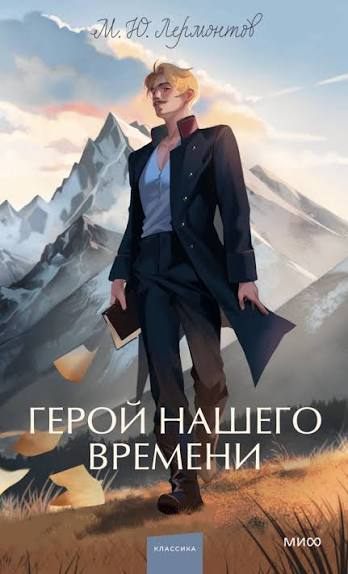
«Герой нашего времени» (A Hero of Our Time)
Grigory Pechorin, a Russian officer serving in the Caucasus, appears in a series of connected stories. Different narrators and his own journal reveal contrasting sides of his character.
Pechorin is described by several narrators, then speaks for himself in his journal. Comparing their accounts takes careful reading, especially in the psychological passages. You can start with «Тамань».
Alexander Pushkin (Александр Пушкин)
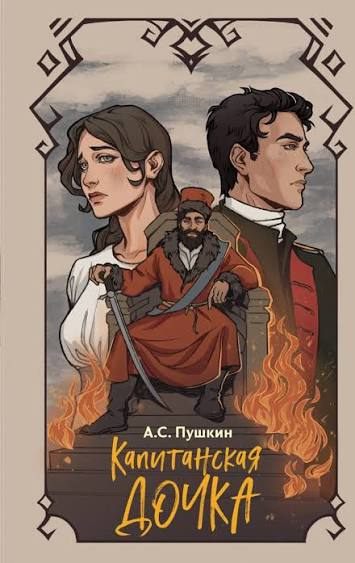
«Капитанская дочка» (The Captain's Daughter)
A young officer, Pyotr Grinyov, is sent to serve at a remote fortress, where he meets Masha Mironova. When rebellion approaches, his personal feelings and sense of duty come under pressure.
The story brings eighteenth-century military life and Pugachev’s rebellion into a personal narrative. Expect unfamiliar ranks, historical terms and expressions.
Mikhail Bulgakov (Михаил Булгаков)
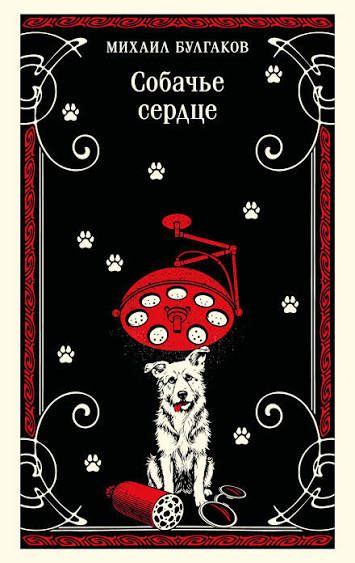
«Собачье сердце» (Heart of a Dog)
In Soviet Moscow, Professor Preobrazhensky undertakes an unusual experiment involving a stray dog named Sharik. The experiment upends life around him in unpredictable ways.
The characters speak in markedly different ways, from scientific language to street slang. Medical vocabulary, Soviet expressions and political references all play a part in Bulgakov’s satire.
Anton Chekhov (Антон Чехов)
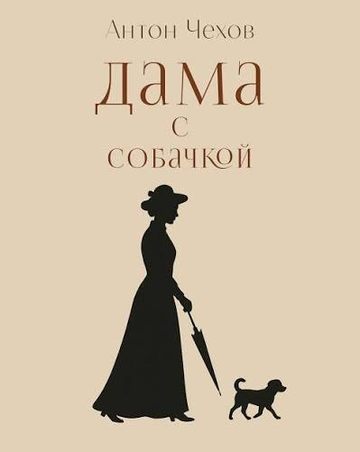
«Дама с собачкой» (The Lady with the Dog)
During a holiday in Yalta, Dmitry Gurov meets Anna Sergeyevna, a woman with a small dog. Their growing connection unsettles the everyday lives they have elsewhere.
Chekhov gives few direct explanations of what the characters feel. Watch how their conversations, gestures and everyday routines change as the relationship develops.
Ivan Turgenev (Иван Тургенев)
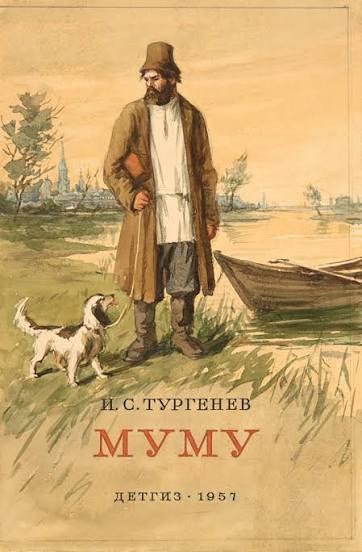
«Муму» (Mumu)
Gerasim, a deaf servant who does not speak, works for a wealthy woman in Moscow. He finds a small dog and grows deeply attached to her.
Turgenev describes household life under serfdom in considerable detail. Some historical terms need explanation; the descriptions also show how characters express feelings through their actions.
Ivan Bunin (Иван Бунин)
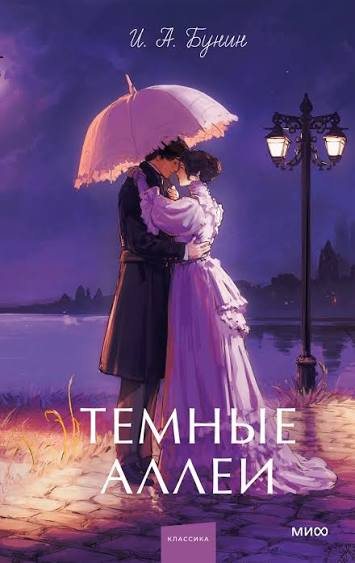
«Тёмные аллеи» (Dark Avenues)
A traveller stops at a roadside inn and unexpectedly meets a woman he knew many years earlier. Their conversation brings memories of a past relationship into the present.
The two characters speak about the past, often without naming everything that still matters to them. Read their conversation slowly and notice how memories shape its tone.
Where to start at C1
I'd choose by genre. «Белые ночи» introduces Dostoevsky's psychological prose. For satire, compare Gogol's «Нос» with Bulgakov's «Собачье сердце».
Choose «Капитанская дочка» for historical prose with a clear plot. «Герой нашего времени» gives you more practice following different narrators.
Read «Муму» for its portrayal of nineteenth-century society and detailed narration. Then compare the quieter, often unspoken emotions in «Дама с собачкой» and Bunin's «Тёмные аллеи».
C2: Major Works of Russian Classical Literature
The C2 selection includes novels with complex narration, historical settings and philosophical debates.
These books still demand patience and often assume familiarity with Russian history, religion, social customs and literary traditions.
Read a few chapters before judging the difficulty: the sentence structure and narration vary considerably between authors.
Nikolay Gogol (Николай Гоголь)
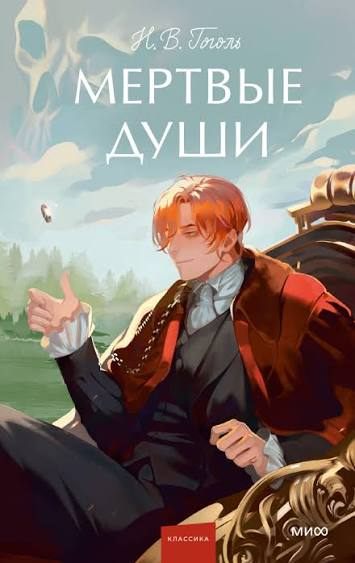
«Мёртвые души» (Dead Souls)
Pavel Chichikov travels through provincial Russia, visiting landowners with an unusual proposal. His journey introduces a series of striking characters and reveals much about the society around him.
Gogol frequently interrupts the story to describe people, places and his own observations. His long sentences, satire and references to nineteenth-century life can slow the reading.
Fyodor Dostoevsky (Фёдор Достоевский)
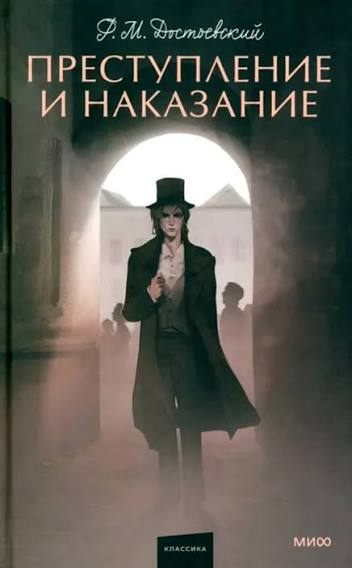
«Преступление и наказание» (Crime and Punishment)
Rodion Raskolnikov, an impoverished former student in St Petersburg, struggles with troubling ideas about morality and power. His thoughts begin to shape decisions that test his conscience.
The novel contains extended conversations and arguments about morality. Tracking the characters’ thoughts also calls for an understanding of poverty and social conditions in nineteenth-century St Petersburg.
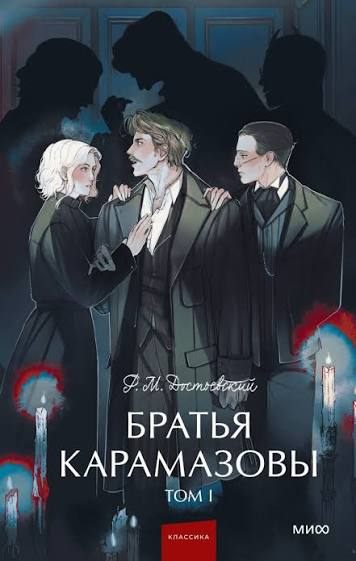
«Братья Карамазовы» (The Brothers Karamazov)
The three Karamazov brothers have sharply different beliefs and complicated relationships with their father. Tensions within the family bring questions of love, faith and responsibility to the surface.
The brothers’ arguments move through questions of faith, morality and responsibility. Some chapters contain long philosophical discussions, with several voices and viewpoints to follow.
Mikhail Bulgakov (Михаил Булгаков)
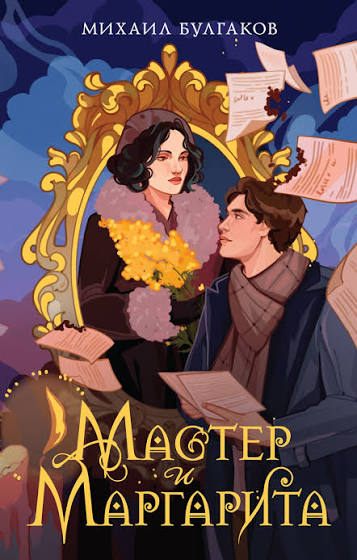
«Мастер и Маргарита» (The Master and Margarita)
A mysterious visitor named Woland arrives in Soviet Moscow, followed by a series of bizarre events. Another storyline follows a writer known as the Master and a woman named Margarita.
Bulgakov moves between Soviet Moscow, biblical settings and fantastic events. Wordplay, sudden changes of tone and references to Soviet life are easier to follow with cultural notes.
Leo Tolstoy (Лев Толстой)
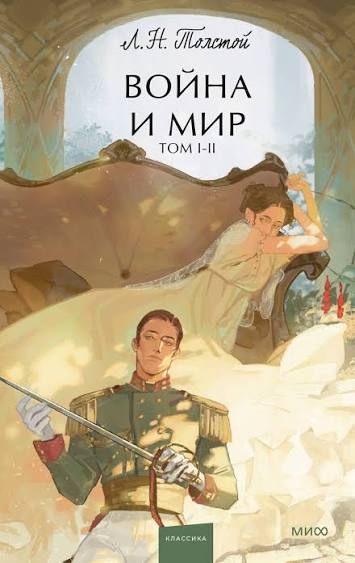
«Война и мир» (War and Peace)
The novel follows several Russian families during the Napoleonic Wars. Their relationships, ambitions and losses unfold alongside major changes in Russia's history.
The novel follows many characters over several years, alongside military and political events. Keep track of the families and historical context, and be prepared for passages written in French.
Ivan Turgenev (Иван Тургенев)
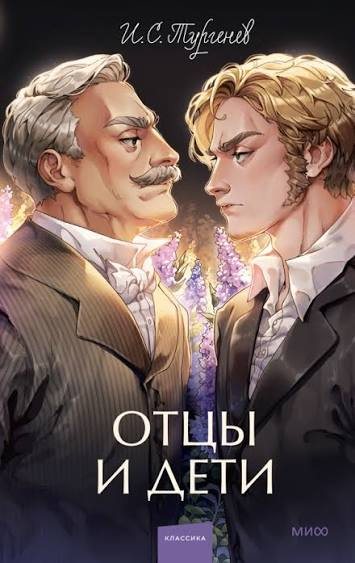
«Отцы и дети» (Fathers and Sons)
Arkady returns to his family home with his friend Yevgeny Bazarov, whose radical ideas unsettle the older generation. Their visit brings differences in beliefs and values into the open.
The conversations between Bazarov and the older generation contain philosophical vocabulary, argument and irony. Knowing the debates of nineteenth-century Russian society helps you follow what is at stake.
Ivan Bunin (Иван Бунин)
«Антоновские яблоки» (Antonov Apples)
A narrator recalls the sights, sounds and smells of life on old Russian country estates. Memories of autumn, harvests and familiar places gradually form a portrait of a changing world.
Bunin builds the piece from memories of landscapes, houses, smells and sounds. It rewards slow reading of descriptive vocabulary and cultural details; there is little conventional plot.
Where to start at C2
At C2, your interests can guide the order: Gogol and Bulgakov write satire, Dostoevsky explores psychological and philosophical conflicts, and Tolstoy follows families through history.
Turgenev's «Отцы и дети» is full of philosophical arguments and clashes between generations. Bunin's «Антоновские яблоки» is shorter and more lyrical, with memories, imagery and cultural detail to unpack.
«Война и мир» needs a longer reading plan. Keep notes on the families, historical events and French passages.
Frequently asked questions
When can I start reading Pushkin in Russian?
Start with a shorter prose work such as «Метель» when nineteenth-century vocabulary and longer sentences feel manageable.
B2 is a useful starting point for guided reading. «Капитанская дочка» is better suited to confident readers around C1.
What's a good first Dostoevsky book in Russian?
I'd try «Белые ночи» (White Nights). It's relatively short and introduces Dostoevsky's psychological writing.
The emotional monologues are demanding, so I'd place it around C1 or higher.
Which Russian classics can I read at B2?
Start with Chekhov's «Толстый и тонкий» or «Смерть чиновника».
If longer sentences and nineteenth-century vocabulary feel manageable, try Pushkin's «Метель» next.
Are Russian children's books easy to read?
Some are. Others use language that can surprise even an experienced learner.
Children's books are full of diminutives, idioms, wordplay and spoken expressions you may not have met in a beginner textbook.
Check the language and plot before deciding. A short, clear story is usually the easiest place to begin.
Is it better to read adapted books first?
Adapted books are useful for building reading fluency and getting used to longer stories.
If you're translating almost every sentence of an original, use an adaptation for regular reading practice. Come back to the original when you're ready.
What should you read first?
For a first complete reading in Russian, choose a short text.
Try a short folk tale, a Tolstoy story or one of Nosov's funny adventures. Move on to Chekhov and Pushkin as you grow more comfortable with the language.
At higher levels, try «Белые ночи», «Нос» or «Собачье сердце» before committing to Dostoevsky's and Tolstoy's longest novels.
The plot should remain clear enough that you want to keep reading.
What to remember
- Start short
Try folk tales and short stories before committing to a long novel.
- Match the language to your level
Check vocabulary, sentence structure, historical context and literary style.
- Use context
Follow the plot first and look up important unfamiliar words.
- Read something that interests you
Your curiosity about a story will help you keep reading.
- Expect to need help sometimes
A dictionary, notes or a teacher can be useful even when you are ready for an original.
Visual guide
Choose your next Russian classic
A compact route through classic Russian literature, from folk tales and short stories to major Russian novels.
Pin this infographicWhat to learn next
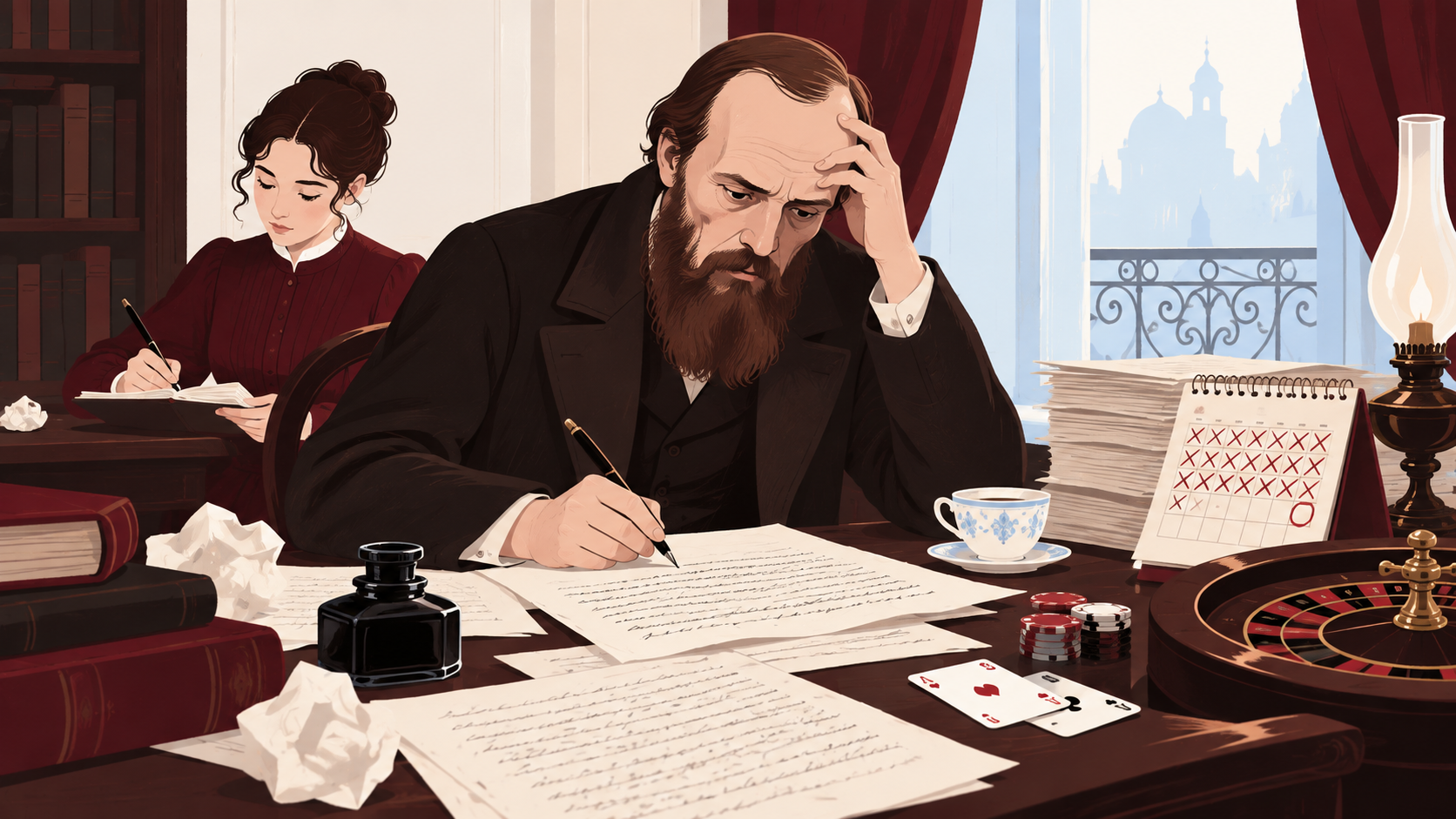
Read how Dostoevsky wrote The Gambler under a demanding deadline.
Want to practise your Russian before your next book?
In our lessons, we can work on reading, vocabulary and comprehension using material that suits your level and interests.